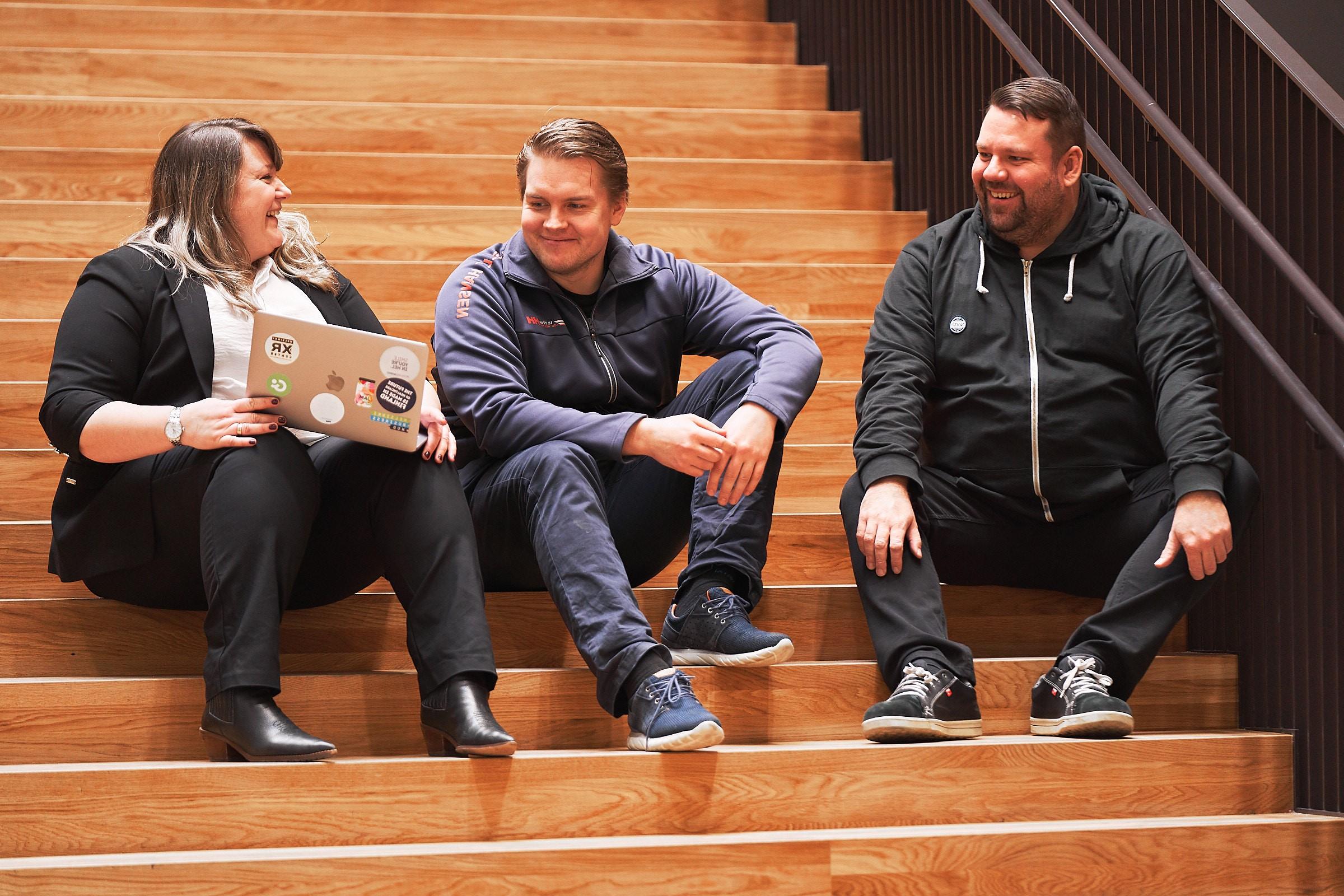
This guest blog is written based on an interview with battery researcher Salman Ahmad, who is currently working as a Visiting Researcher at the School of Technology and Innovations at the University of Vaasa.
Salman holds a master’s degree in Nanoscience and Nanoengineering from Sakaraya University, Turkey. In this blog post, Salman shares insights on where battery technologies are headed, what a typical day looks like for a battery researcher, what kinds of roles the field offers, and which skills matter the most for building a career in the industry.
Every day is different for a battery researcher
Salman is a Visiting Researcher at the University of Vaasa, focusing on developing and characterising advanced materials for next-generation battery technologies, particularly lithium-ion cells.
“During my studies, I became fascinated by how small changes in material structure can lead to big improvements in real-world applications. Similarly, I was excited to see how fast the battery industry was growing, especially with the rise of EVs and clean energy solutions. It felt like a field where research and industry are strongly connected”, Salman says.
As a researcher, no two days are alike. Some days consist of running lab experiments or electrochemical tests, while others are for analysing data, comparing results and trying to understand the mechanisms. There are also days dedicated to reading papers and discussing current trends with colleagues.
Working with battery technologies has shown Salman how closely research and industry are linked and how quickly things are advancing in the field right now. “Introduction of new materials and cell design can quickly move from the lab to large-scale production, especially with the rapid growth of EVs and energy storage markets”, Salman explains.
“The industry must grow – smartly and sensibly.”
Battery technologies are improving in performance, cost, and scalability. According to Salman and industry analyses such as BloombergNEF’s EV market reports, one driver of rising battery demand is the global growth in electric-vehicle (EV) sales. “The reports show a historical price decline in lithium-ion battery packs since 2010, making electric mobility far more reachable than before.”
At the same time, sustainability has become a core requirement. The new EU Battery Regulation emphasises recycling efficiency, carbon footprint reporting, and resposible sourcing of raw materials. “Current breakthroughs are not only about performance, but also about affordability, safety, and sustainability, and the industry is evolving in multiple directions simultaneously”, Salman explains.
Two major trends stand out. One is the shift towards cost-effective and safer battery technologies. The other is the push for higher energy density, including silicon-based anodes and the development of solid-state batteries. “Scaling up production, securing raw materials, addressing environmental challenges, and building strong recycling schemes is not simple.” The industry’s evolution presents significant challenges – and major opportunities for innovation.
Strong employment opportunities in the battery industry
According to Salman and European Commission’s reports, global battery manufacturing capacity is increasing, especially in Europe, North America, and China. Europe alone has announced numerous gigafactory projects over the past few years. The current trend is driving demand across the entire value chain, including demand for expertise and professionals. As the industry grows, employment opportunities are looking strong.
The field is competitive and demanding, but it provides many opportunities for students and industry professionals. The battery industry is broad. “When people think about a career in the battery field, most people imagine it as working in laboratories and becoming a researcher. This is only a direction, while the field is much wider than that”, Salman says. Career options include manufacturing, research and development, consulting, recycling, and supply‑chain management.
Over the past decade, the industry has advanced rapidly. “The combination of innovation and global climate goals makes the future of batteries promising for researchers, engineers, and students”, Salman mentions.
Advice for students
Salman provides advice for students considering a focus on battery technologies: “Learn the fundamentals of electrochemistry and understand how batteries work, and what actually happens inside the cell during charge-discharge. Technologies will evolve, but the main principles remain the same.”
Building strong foundations in electrochemistry, materials science, and engineering is essential, and so are practical lab skills such as assembling cells, running electrochemical tests, and interpreting performance data and other analyses.
“From my viewpoint, the battery sector is the most attractive strategic technology industry of this era”, Salman highlights.
Batteries are reshaping how the society is powered
The future of battery technologies looks bright: the industry is improving and becoming safer and more sustainable. Batteries are reshaping how the society is powered and they are playing a crucial role in electrifying transportation. Key trends, such as silicon-based anodes, solid-state development, and recycling are moving from lab to production faster than before. With the rapid growth and rising demand across the entire battery value chain, career opportunities look bright.
“The combination of innovation and global climate goals makes the future of batteries promising for researchers, engineers, and students”, Salman concludes.

Curious to learn more?
If you want to dive deeper into battery technologies, explore free courses through FITech and study topical courses offered by Finnish universities of technology.
Learn more and find energy storage courses.
Written by FITech’s communications and marketing coordinator. Based on an interview with battery researcher Salman Ahmad.