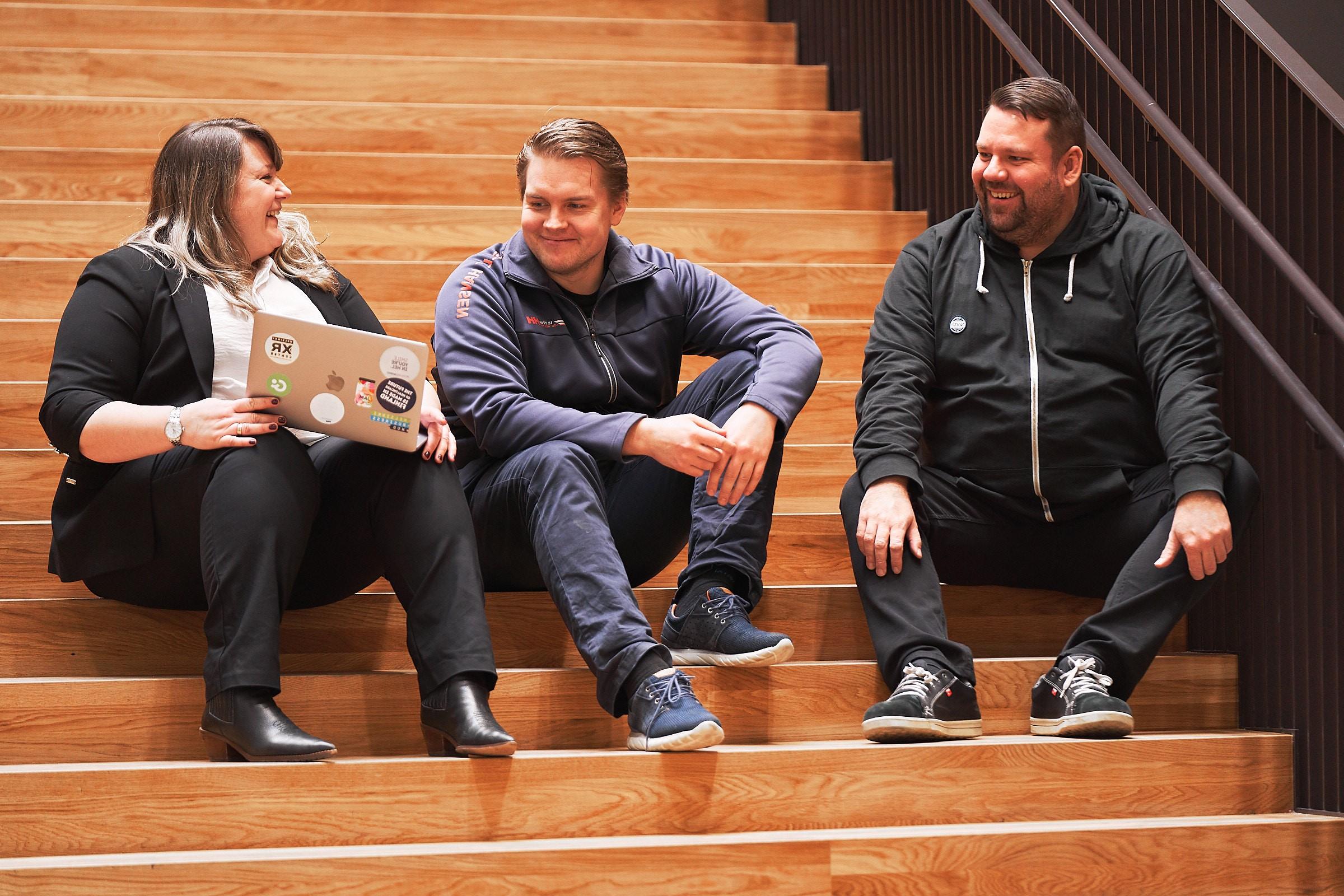
Finland ranked sixth in ICT sector growth prospects
In recent years, the employment situation in the ICT sector in Finland has been more challenging than before, with the number of open positions declining. However, by June 2025, a shift towards a brighter future was already visible. According to the latest labor market barometer by ManpowerGroup, Finland boasts the best employment prospects in the industrial sector, and the outlook in the information technology sector has also improved significantly. The change is quite evident. The barometer indicates that Finland’s growth prospects in the IT sector are the sixth-best globally.
Other references point towards a brighter future, as well. The software industry survey conducted by the University of Jyväskylä, Technology Industries of Finland, Software Finland, University of Helsinki, and Tampere University provides up-to-date information about the software industry in Finland. In 2025, the survey examined the ICT sector’s growth expectations, and development and challenges related to artificial intelligence. A total of 411 companies participated in the survey, nearly 93 percent of which were B2B businesses. More than half of the companies were microenterprises. Despite the slowing growth expectations in the sector, over 61 percent of respondents expect their revenue to grow in the future. Without responses from the microenterprises, approximately 79 percent of the respondents anticipate an increase in the number of employees.
“AI is not removing jobs, but it is transforming tasks. According to our latest Sykemittari research, recruitment interest in software companies has been growing since the spring of 2024. Currently, more than 50% of software companies plan to recruit in the next six months. These results tell a clear story: skilled professionals are needed now and in the future in this growing sector. With AI automation of previous tasks, experts must be ready to elevate to the next level of value creation,” describes Rasmus Roiha, CEO of Software Finland.
The importance of AI is growing and a variety of experts are needed
According to the Finnish National Agency for Education, the applications of artificial intelligence are extensive, and AI can be utilised in various fields. In industry, AI can help optimise production chains, detecting errors, and predicting demand. In the service industry, AI can enhance customer experience and increase customer insight. Real-time customer service solutions, such as chatbots, can expedite response times instead of keeping customers waiting. In healthcare, AI can help solve challenges related to shift planning and appointment scheduling. Artificial intelligence plays a central role in the ICT sector, which, according to the Finnish National Agency for Education, is at the forefront of developing AI technologies. AI can also provide faster solutions, for example in generating code, although the verification of outputs and the design of secure systems remain the responsibility of humans.
Over 80 percent of respondents in the software industry survey are currently using or developing artificial intelligence. Of these respondents, over 41 percent believe that AI will be central to their company’s strategy in the future. AI is already being widely used and developed by numerous entities. Among the participants, 70 percent report that they are currently investing in AI. Artificial intelligence is employed to enhance efficiency, create new business, achieve cost savings, increase market share, and improve decision-making. Approximately 2,4 percent of the respondents feel that AI has not produced any benefits.
The results of the software industry survey show that diverse AI skills and professionals will be needed in the future across multiple fields. The versatility of the skills is important, as AI solutions aim to enhance efficiency and growth, for example in business and strategy. Professionals with diverse expertise will have a strong advantage as the field continues to develop.
”The job market in the ICT sector has faced challenges globally, but it is starting to get better. Still, the rise of artificial intelligence has raised the skill requirements. As developers become more productive, basic tasks are being phased out. Therefore, enhancing your own skills has become very important”, reflects Petri Vuorimaa, Professor at Aalto University Department of Computer Science.
AI offers opportunities and creates challenges
Critical thinking and fact-checking skills are essential when using artificial intelligence. According to the Finnish National Agency for Education, those working with AI need to understand its role as a societal phenomenon and possess the critical ability to analyse and evaluate information as well as to verify facts. Combating disinformation requires a variety of thinking skills. The Finnish National Agency for Education also notes that the responsible societal use of AI additionally demands expertise related to legislation, sustainability, and data.
Technology Industries of Finland and AI Finland estimate that technology companies in Finland are seeking AI experts with skills that support building new solutions, such as data processing abilities. Key skill needs have been identified especially under five main themes: data, cloud services and platforms, AI application, programming, software development, and strategic management. Both the Finnish National Agency for Education and the assessments by the Technology Industries of Finland and AI Finland emphasise skills related to data.
The role of data also emerged in the software industry survey, where the common AI-related challenges included data quality and a lack of relevant expertise. Relevant knowledge in information management may be one answer to enhancing data quality. Other challenges identified in the survey included, for example, that AI lacks a clear purpose or benefit. These challenges can be addressed by developing one’s own AI-related expertise.
“Continuous learning and the transformation of work tasks and roles are becoming normalised. Job descriptions in the technology sector are evolving faster than in many other fields. The question now is which learning model suits each individual best. In the Mimmit koodaa survey, a desire to take single-specific courses alongside work emerged as the top choice among working adults (71% of respondents). FITech fulfills this need perfectly,” Roiha states.
Prospects: The industry’s situation will improve and experts will be needed
Although the ICT sector has recently been in turmoil and employment sluggish, Roiha believes the situation is improving and that new opportunities brought by digitalisation and automation will increase the demand for skilled professionals in the future. In an article for Tekniikka ja Talous magazine, Roiha describes how IT skills often lead people to work in an industry, where accumulated software expertise is utilised. According to Software Finland’s recent Sykemittari study, the software industry is on the rise again, and over half of software companies in Finland are planning to hire new employees.
Based on publications and data from summer 2025, it appears that the Finnish ICT sector is emerging from challenges into a phase of positive development. Artificial intelligence and technological expertise play a key role as companies are looking to grow their business both nationally and internationally. Artificial intelligence and skills related to it may indeed be crucial in building competitiveness.
Develop relevant software industry skills for free
The FITech network and its broad expertise can help people update their ICT skills by offering free-of-charge university courses for both adult learners and degree students. Courses are available from beginner to advanced studies. The diversity of the course offering allows finding new perspectives for developing expertise.
The FITech ICT project, funded by the Ministry of Education and Culture, continues with current funding until the end of July 2026. You can develop current and relevant skills related to AI, cybersecurity, software design, programming, game development, cloud services, and information security for free through the courses offered by Finnish universities of technology. You can start with beginner or intermediate courses, or explore advanced studies.
All FITech courses are free and available for all Finns and people permanently living in Finland. You need a Finnish personal identity code to apply and Finnish e-identification to confirm your study place.